If you’ve received something claiming to be an mPokket legal notice, figuring out mPokket legal notice real or fake is the first question that matters — before you do anything else, it’s worth slowing down and checking whether what you received is actually legitimate. In our experience helping clients deal with exactly this kind of situation, a real notice and a scare-tactic message look very different once you know what to check.
mPokket Is a Real, RBI-Registered NBFC — But Not Every “Notice” Is
To be clear: mPokket itself is a legitimate, RBI-registered NBFC, and it can issue genuine formal demand notices or legal warnings for unpaid dues — that part is real. What’s often not real is the specific message landing in your WhatsApp inbox at odd hours. Recovery agents, sometimes working through third-party collection channels, frequently send informal, frightening draft “notices” designed purely to panic you into paying quickly, without those messages actually carrying real legal weight.
mPokket Legal Notice Real or Fake: How to Tell the Difference
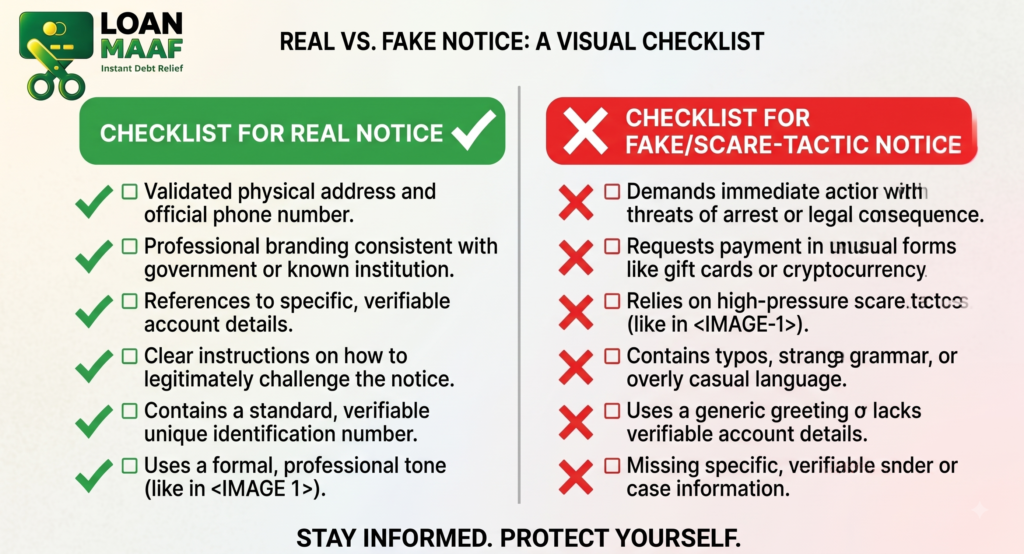
Signs of a Real Notice
- Sent through formal official channels — a registered email, or a physical letter from an authorized advocate or officer
- References your exact loan account number and a specific outstanding balance that matches your actual records
- Uses proper legal framing without abusive or threatening language
Signs of a Fake or Scare-Tactic Notice
- Dropped informally via WhatsApp or SMS, often outside normal business hours
- Contains unverified stamps, poor formatting, or fake court/police letterheads
- Makes immediate threats of arrest or police action, designed purely to create panic and rush a payment
Verify the Debt Yourself First
Figuring out mPokket legal notice real or fake status starts with your own records, not the notice itself. Before reacting to any notice, check your official mPokket app dashboard directly and compare the stated overdue amount against your actual borrowing history. If the numbers don’t match, or if you can’t find any record of the account referenced, that’s a strong signal the notice isn’t legitimate — or at minimum, needs direct verification with mPokket itself before you consider paying anything.
Your Rights Under RBI Guidelines
Regardless of whether a notice turns out to be real, the agent or channel contacting you is still bound by RBI’s Fair Practices Code, which every regulated lender and their recovery agents must follow:
- No abusive language. Threatening, intimidating, or humiliating language is a violation, whether it’s spoken, written, or sent over WhatsApp.
- No calls outside 8:00 AM to 7:00 PM. Contact outside this window is not permitted, regardless of the channel.
- No contacting your family, employer, or personal contacts. Agents are not permitted to disclose your debt details to anyone else or attempt to pressure you through people around you.
If any of these are being violated, that’s worth documenting and raising directly, separate from whether the notice itself is genuine.
Pay Only Through Official Channels
If you do decide to settle or clear your dues, pay exclusively through mPokket’s official app payment gateway. Never transfer money to a recovery agent’s personal UPI ID or bank account, no matter how convincing the request sounds — this is one of the clearest red flags of a scam, and it offers you zero protection or proof of payment if something goes wrong.This single habit protects you regardless of whether the mPokket legal notice real or fake question is ever fully resolved.
What to Do Next
Every situation is a little different depending on how the notice arrived and what it actually says. If you’d like our team’s take on your specific case, tell us:
- How you received the notice — WhatsApp, email, or post
- What it threatens — court, police, or extra fees
Get help figuring out your next step →
And if the pressure you’re facing goes beyond this one notice, our guide on how to talk to recovery agents legally covers exactly what you’re entitled to say and expect from any lender’s recovery process, not just mPokket.
Frequently Asked Questions
Is mPokket a real, legitimate lender?
Yes. mPokket is a legitimate, RBI-registered NBFC that can issue genuine formal demand or legal notices for unpaid dues. Legitimacy of the lender doesn’t automatically mean every message claiming to be from them is genuine, though.
How do I check if an mPokket legal notice real or fake situation applies to me?
Check the channel it arrived through (formal email/post vs. informal WhatsApp), whether it references your exact loan account number and balance, and whether the language is professional or contains threats designed to pressure quick payment. Verifying the amount directly on your mPokket app dashboard is the fastest first step.
Can mPokket recovery agents call me anytime or use threatening language?
No. Under RBI’s Fair Practices Code, recovery agents cannot call before 8 AM or after 7 PM, cannot use abusive or threatening language, and cannot contact your family or employer to pressure repayment.
Should I pay a recovery agent directly if they ask for UPI payment?
No. Always pay exclusively through mPokket’s official app payment gateway. Never transfer money to an agent’s personal UPI ID or bank account.
What should I do if I think the notice is fake?
Verify your actual outstanding balance on the official mPokket app first. If the notice’s details don’t match, or the channel and language look like a scare tactic, avoid engaging directly and consider reaching out to a professional for guidance on next steps before making any payment.
Written by the LoanMaaf Financial Expert Team
Our team regularly helps clients make sense of recovery notices and calls, including verifying whether communications are genuine and understanding what lenders and agents are actually allowed to do under RBI rules. Received a notice you’re unsure about? Reach out to our team for a free, confidential review.
Published: [18.06.2026] | Last updated: [18.08.2026]