
If there’s one question our team hears more than any other, it’s about personal loan settlement percentage — “Kitna percent settle hoga mera loan?” It’s the first thing anyone wants to know before they even start the process, and fair enough — it’s the number that decides whether settlement is worth pursuing at all. So instead of giving you a vague range and moving on, we’re breaking down the real personal loan settlement percentage you can expect, based on what we actually see at the negotiation table, case by case.
What Percentage Do Lenders Actually Accept?
Understanding the typical personal loan settlement percentage helps set realistic expectations before you even start negotiating. In most cases we handle, lenders agree to settle for somewhere between 40% and 70% of the total outstanding amount — but where exactly you land within that range depends on a few specific factors: how long the account has been in default, how strong your hardship case is, and honestly, how the negotiation itself is handled. This isn’t a fixed number set in a rulebook; it’s a genuine back-and-forth, and the opening offer from a bank is rarely their final one.
Settlement Percentage Ranges We See in Practice
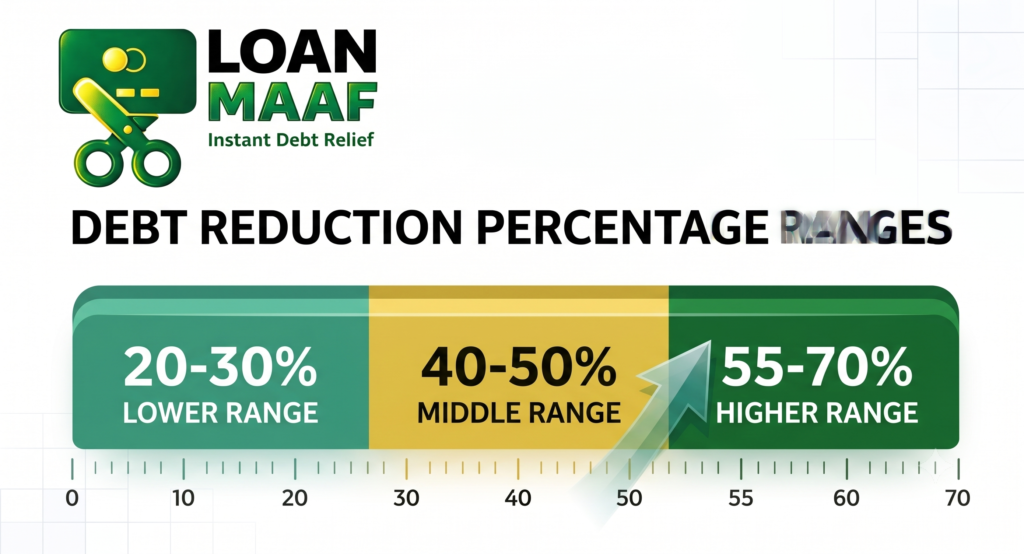
The personal loan settlement percentage you’re offered generally falls into one of three ranges, depending on your situation:
40% to 50% — The Opening Offer Range
This is typically where negotiations start, not where they end. When we or our clients first approach a lender, the initial counter-offer from their side tends to fall in this range — it’s an anchor point banks use, expecting you to negotiate upward from there. Accepting the first number offered is usually leaving money on the table.
55% to 70% — Where Most Settlements Actually Land
Based on what we consistently see across real negotiations, the majority of final settlements close somewhere in this range. This tends to be the realistic “middle ground” both sides land on once hardship documentation is presented and the back-and-forth negotiation plays out properly.
20% to 30% — Rare, Extreme-Hardship Cases
These lower percentages do happen, but they’re the exception, not the rule. They typically apply to very old, long-defaulted accounts — cases where a lender has essentially written the loan off internally and views any recovery at all as a win. If your default is recent, don’t expect this range; it’s specific to accounts that have been unpaid for a very long time with little realistic chance of recovery.
Are You Even Eligible? (Quick Check)
Before you can negotiate a percentage at all, lenders generally expect to see:
- At least 3 to 6 months of missed EMI payments
- Documented proof of genuine hardship (job loss, medical emergency, business failure, etc.)
- No ongoing ability to resume full repayment in the near term
- Willingness to pay a lump sum, even if smaller than the total owed
If you’re checking most of these boxes, you’re in a realistic position to negotiate. If you’ve only missed one payment, it’s usually too early — lenders rarely discuss settlement percentages that soon, and restructuring is a more realistic conversation at that stage.
Settlement isn’t an informal, case-by-case favor a bank chooses to grant — it’s governed by the RBI’s Framework for Compromise Settlements and Technical Write-offs, which requires every bank and NBFC to have a board-approved settlement policy rather than leaving terms to an individual branch or officer. One detail worth knowing that most bank blogs don’t mention: under this framework, if your settlement payment is spread out and takes longer than three months to complete, it gets classified as restructuring rather than settlement — a distinction that can affect how the account is reported. This is exactly why the personal loan settlement percentage you negotiate is often tied to your ability to pay in a single lump sum rather than installments.
How the Settlement Amount Affects Your Credit Report
Whatever percentage you settle at, one thing stays consistent: the impact on your credit report.
- Your account will be marked “Settled” on your CIBIL report — a distinct status from “Closed,” and lenders can see the difference clearly.
- Most people see a drop of roughly 75 to 100 points on their credit score once the settlement is reported.
- This status typically stays visible on your credit history for up to 7 years, which can affect your ability to get new credit during that window.
This is true regardless of whether you settled at 70% or 30% — the percentage affects your wallet, but the credit impact is fairly consistent either way. If rebuilding afterward is on your mind, our guide on improving your CIBIL score is a good next step once settlement closes.
The One Rule That Protects You: Get It in Writing
No matter what percentage you agree on verbally, never make a payment until you have a signed, written settlement letter from the lender stating the exact agreed amount and deadline. Once you’ve paid, always follow up and secure your No Dues Certificate (NDC) — this is your permanent proof the account is cleared, and you may need it if any discrepancy shows up on your credit report down the line. We’ve seen firsthand how much stress this one document saves people later.
Estimate Your Realistic Settlement Target
Every case is different, and the percentage that applies to you depends on your specific situation. If you’d like our team to help estimate a realistic target for your case, tell us:
- Your current outstanding loan amount
- How many months you’ve missed EMI payments
Get a free settlement estimate from our team →
And if recovery agents have already started reaching out while you’re figuring this out, our guide on your legal rights around recovery agent calls is worth a read alongside this one.
Frequently Asked Questions
Personal loan settlement mein kitne percent tak discount milta hai?
Zyada tar cases mein, lenders 40% se 70% ke beech settle karte hain. Shuru mein offer kam hota hai, lekin sahi negotiation ke baad amount usually 55-70% range mein final hota hai.
What is the average personal loan settlement percentage in India?
Most settlements finalize between 55% and 70% of the total outstanding dues, though very old, long-defaulted accounts occasionally settle lower, around 20-30%.
Does a higher settlement percentage look better on my credit report?
No — the “Settled” status and its impact on your credit score stay largely the same whether you settled at 30% or 70%. The percentage affects your payment, not the credit report classification.
Can I negotiate a lower percentage than the bank’s first offer?
Yes, and you usually should. The first number a lender offers is typically an opening position, not their final one — most final settlements land higher (in the bank’s favor) than the very first offer, but there’s still room to negotiate down from where they start.
What documents do I need before paying a settlement amount?
A signed, written settlement letter stating the exact amount and deadline, and after payment, a No Dues Certificate confirming the loan is officially closed.
Written by the LoanMaaf Financial Expert Team
Our team negotiates loan and credit card settlements directly with Indian banks and NBFCs, and the percentages and figures in this article reflect what we actually see in practice, not just published guidelines. Want a realistic estimate for your own case? Reach out to our team for a free, confidential review.
Published: [01.08.2026] | Last updated: [01.08.2026]