
What happens if you stop paying EMI in India is one of the most searched questions by borrowers in financial distress — and for good reason. The consequences are real, they escalate in stages, and most people don’t know their rights or options until it’s too late.
This guide walks you through all 7 stages — from the first missed payment to legal action — with complete honesty. No scare tactics, no sugarcoating. Just the facts, your rights at each stage, and what you can do about it.
Why Do People Stop Paying EMIs in India?
Before we get into consequences, it is worth acknowledging that nobody stops paying EMIs because they want to. The most common reasons we see at Loan Maaf:
- Job loss or salary cut — sudden income disruption with no emergency fund
- Medical emergency — hospitalisation that drains savings overnight
- Business failure — especially common after economic disruptions
- Over-leveraging — too many loans running simultaneously, total EMI burden unmanageable
- Relationship breakdown — divorce or death of a co-earning spouse
If you are in any of these situations — you are not alone. According to the Reserve Bank of India’s Financial Stability Report, retail loan defaults have risen significantly post-pandemic, with personal loan NPAs being among the fastest growing categories. Our team at Loan Maaf has helped 1,000+ borrowers across India find a legal way out — and we can help you too.
Stage 1: You Miss Your First EMI (Day 1–29)
What happens if you stop paying EMI in India starts the moment your due date passes.
Bank notification: Within 24–48 hours, most banks send an automated SMS or email reminder. Some follow up with a phone call within the first week.
Late payment charges: Most loan agreements include a late payment fee — typically 1% to 3% of the overdue EMI amount per month. This compounds every month you don’t pay.
CIBIL impact: Minimal at this stage — but the clock has started. A missed EMI is reported to credit bureaus once it is 30+ days overdue.
What you should do: Call your bank immediately. Ask for a short deferment, grace period, or EMI holiday. Most banks have a hardship process — but you have to proactively request it. If recovery calls are already starting, our Recovery Call Handling service can legally take over all bank communication on your behalf.
Stage 2: 2–3 Missed EMIs (30–90 Days Overdue)
This is where consequences start escalating meaningfully.
Collections calls begin: After 30 days overdue, banks assign your account to their internal collections team. Calls become daily. Some banks engage third-party recovery agencies at this stage.
CIBIL score impact: Your report now shows the account as “overdue” or “Special Mention Account (SMA-1 or SMA-2).” Your CIBIL score can drop 50–150 points depending on your overall profile.
Legal notices: At 60–90 days overdue, NBFCs and fintech lenders especially begin sending formal legal demand notices. These are not court filings yet — but they are serious and should not be ignored.
Recovery agent visits: Some lenders start sending agents to your home or workplace at this stage. Know your rights — and know that we can legally stop these recovery visits on your behalf.
What you should do: Do not go silent. This is the best time to explore a loan restructuring or EMI reduction with the bank. If the bank is unresponsive, consult a professional loan settlement and negotiation advisor to understand your options before they narrow further.
Stage 3: 90 Days Overdue — The NPA Classification
This is the most critical milestone in understanding what happens if you stop paying EMI in India.
After 90 consecutive days of missed payments, your loan is officially classified as a Non-Performing Asset (NPA) by the bank — a term defined by the RBI under its Prudential Norms on Income Recognition, Asset Classification and Provisioning.
What NPA means for you:
- The bank must formally report your account as Sub-Standard to CIBIL and other bureaus
- Your CIBIL score drops significantly — 150 to 300 points from your baseline
- Recovery pressure intensifies sharply
- The bank begins provisioning internally for possible loss on your account
The silver lining — settlement becomes possible: Banks are most open to negotiating settlements once an account hits NPA. Before NPA, they expect full repayment. After NPA, they know full recovery is uncertain — making them willing to accept a negotiated lump sum. Read our complete guide to loan settlement in India to understand exactly how this works.
Stage 4: Recovery Agent Visits Intensify
Once NPA is declared, banks almost always engage external recovery agencies. Under RBI’s Fair Practices Code and Supreme Court directives, recovery agents must follow strict rules — but violations are extremely common.
What recovery agents can legally do:
- Contact you between 8 AM and 7 PM only
- Visit your home or office at reasonable hours
- Request payment and discuss repayment options
What they cannot legally do:
- Call before 7 AM or after 7 PM
- Use abusive, threatening, or obscene language
- Intimidate or threaten your family members
- Misrepresent the amount owed or their identity
- Visit your workplace to cause public embarrassment
If a recovery agent crosses these lines: File a complaint with the bank’s Grievance Redressal Officer, the RBI Banking Ombudsman, and your local police if there is any physical intimidation. Our Stop Recovery Visits & Legal Support team intervenes legally and immediately — so you never have to face these calls and visits alone again.
Stage 5: 6–12 Months — Legal Action Begins
Legal recovery suit: For outstanding amounts above ₹1–2 lakh on unsecured loans, banks may file a recovery suit in civil court. This is a civil matter, not criminal — you will not be arrested for not paying a personal loan or credit card.
Debt Recovery Tribunal (DRT): For amounts above ₹20 lakh, banks can approach the DRT — a specialised tribunal with fast-track powers for debt recovery.
Arbitration: Many loan agreements include an arbitration clause. Banks can initiate private arbitration, which moves faster than civil courts.
Write-off: After 12–24 months, some banks “write off” the loan internally. This is an accounting move — it does not cancel your legal debt. The bank can still pursue you for recovery after a write-off.
At this stage, professional guidance is not optional — it is essential. Our loan settlement and negotiation team has handled cases at every stage, including accounts where arbitration or court proceedings have already started.
Stage 6: What Happens to Your CIBIL Score? (Full Timeline)
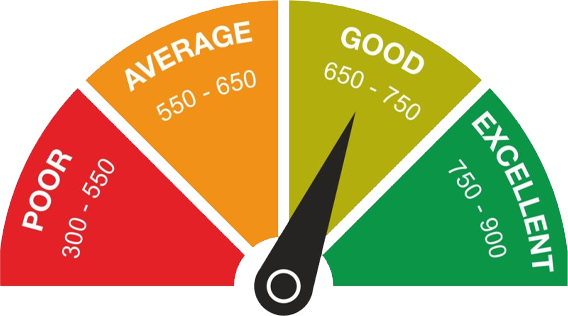
| Stage | Days Overdue | CIBIL Status | Score Impact |
|---|---|---|---|
| Regular payments | 0 | Normal / Standard | No impact |
| First missed EMI | 1–29 days | Overdue | Mild (0–30 points) |
| Multiple missed | 30–89 days | SMA-1 / SMA-2 | Moderate (50–100 points) |
| NPA classification | 90+ days | Sub-Standard | Significant (150–250 points) |
| Loan settled | Post-settlement | “Settled” on report | Stays 7 years |
| Loan written off | Bank write-off | “Written Off” on report | Worst tag, stays 7 years |
Key insight: Once you are 90+ days overdue, the CIBIL damage is already done. At that point, the argument against settlement — “it will hurt my CIBIL score” — is much weaker, because the score is already badly damaged. A properly negotiated settlement, followed by disciplined credit behaviour, typically leads to better long-term recovery than continued default.
If you specifically have credit card debt, see our detailed guide: Credit Card Settlement in India: Complete Guide to Legally Reduce Your Debt (2026).
Stage 7: Your Options — What You Can Actually Do
Knowing what happens if you stop paying EMI in India is only half the picture. Here is what you can do at each stage:
Option 1 — Loan Restructuring (Best at Stage 1–2)
Contact the bank and request restructuring — reduced EMI, extended tenure, or a temporary moratorium. Banks are required by the RBI to consider restructuring requests made in good faith before initiating aggressive recovery.For a full breakdown of how restructuring compares to settlement — including CIBIL impact and which one fits your situation — see our detailed guide: Personal Loan Settlement vs EMI Restructuring: 7 Essential Differences (2026).
Option 2 — Partial / Good Faith Payment (Stage 1–3)
Even paying 30–40% of the due EMI signals intent and can delay escalation. Always get written confirmation from the bank that partial payment is accepted before making it.
Option 3 — Loan Settlement (Best at Stage 3–6)
Loan settlement is a structured, legal process where you negotiate a one-time lump-sum payment — typically 40–70% of the outstanding amount — and the account is formally closed. The bank writes off the remaining balance, and you receive a No-Dues Certificate.Not sure whether settlement or restructuring is the better fit for your case? Compare both options in detail here.
Once settled, we also assist with complete debt closure documentation so you have full legal proof of resolution and can begin rebuilding your credit.
Option 4 — Legal Defence (Stage 5–6)
If you have received a court summons or arbitration notice, consult a legal professional immediately. You have the right to respond, contest, and negotiate even at this stage. Do not ignore legal notices — ignoring them results in ex-parte orders against you.
Can You Go to Jail for Not Paying EMI in India?
No. This is the single most common fear — and it is unfounded for personal loans and credit card debt.
Not paying an unsecured loan is a civil matter. Banks can pursue civil recovery through courts — they cannot have you arrested for the act of defaulting on a personal loan or credit card.
Criminal exposure only arises if:
- You submitted fraudulent documents to obtain the loan
- You issued cheques that bounced (Section 138, Negotiable Instruments Act — cheque dishonour is a criminal offence)
For most genuine hardship cases, jail is not a realistic scenario. If you have received what looks like a criminal notice and are worried, contact us immediately — we will read it and tell you exactly what it means.
The Worst Mistake: Silence
Every week we speak to clients who waited 12–18 months before seeking help. What waiting costs you:
- Outstanding balance grows every month from compounding interest and penalties
- CIBIL score continues deteriorating
- Bank’s willingness to settle at a reasonable amount decreases over time
- Legal exposure increases — more options close off
Early action — even when your situation feels impossible — always produces better outcomes than silence. Talk to our team today — the first consultation is free and completely confidential.
FAQ: What Happens If You Stop Paying EMI in India
Q1. Will my employer find out if I default on a loan?
Recovery agents can contact your employer to locate you, but they cannot disclose your debt situation to your employer as a means of applying pressure — doing so is a violation of your privacy rights and the RBI’s recovery guidelines, and is actionable as a complaint against the bank.
Q2. I have multiple loans I can no longer pay. What do I prioritise?
Secured loans (home loans, car loans) first — non-payment can result in asset seizure. For unsecured loans (personal loans, credit cards), a professional can help you negotiate with all creditors simultaneously. Our loan settlement team handles multi-creditor cases regularly.
Q3. Can I negotiate directly with the bank without a settlement company?
Yes — but banks have experienced collections teams who know exactly what terms favour the bank. Most self-negotiating borrowers accept worse terms than necessary or pay without obtaining proper closure documentation. Professional guidance typically gets better settlement amounts and complete paperwork.
Q4. What if I genuinely have zero money right now?
Banks have limited practical options if you have no income and no assets. But the debt does not disappear — interest accrues and the CIBIL damage compounds. Communicate with the bank, keep lines open, and the moment you have any capacity, a settlement becomes possible. A partial settlement can be arranged even with limited funds in many cases.
Q5. What about credit card debt specifically?
Credit card debt escalates faster because interest rates are higher (24–48% annualised). Read our complete guide: Credit Card Settlement in India: How to Legally Reduce Your Debt (2026).
Q6. How does Loan Maaf help in this situation?
We handle every stage. First, we take over all bank and recovery agent communication via our Recovery Call Handling service — so the harassment stops immediately. Then we negotiate the best possible settlement, ensure all documentation is complete before any payment is made, and help you get your NOC and debt closure certificate. We work with all major banks and NBFCs across India.
Closing Thoughts
What happens if you stop paying EMI in India is not a mystery — it follows a predictable 7-stage path. The earlier you act, the more options you have and the better the outcome you can negotiate.
If you are already in the middle of this — whether stage 1 or stage 6 — the answer is the same: take action today.
Call us at +91 9622289229 for a free, confidential consultation. We will tell you honestly where you stand and what your best options are — with no pressure and no commitment.
Loan Maaf is India’s trusted loan settlement and debt relief company, based in Delhi (Saket Court), serving clients Pan-India.
Our services: Recovery Call Handling | Stop Recovery Visits & Legal Support | Loan Settlement & Negotiation | Debt Closure & No-Dues Assistance